
THE FUTURE PULLING US FORWARD
ON HOLINESS, MISSION, AND THE DAY OF GOD
I have to admit, I’m not very good at waiting. I like clarity. Movement. Progress. Waiting, especially when it takes longer than expected, has a way of exposing impatience in me. It stirs questions in me I really don’t like: Is it still coming? Did I misunderstand? Has something changed?
I recently wrote a book called All Things Restored,which traces the Bible as one unfolding story of God restoring the world. As I was writing the book, I came across a passage in 2 Peter 3, and to my surprise it said something that challenges the Calvinist mindset of many fellow-believers here in the Netherlands.
In 2 Peter 3, waiting is not passive and the future is not distant. The early believers felt this tension. Not decades later, but already within their generation. The promise of Jesus’ return stood at the center of their hope, yet time kept ticking. And so Peter writes, not to explain away the delay, but to reframe it.
With the Lord one day is as a thousand years, and a thousand years as one day… The Lord is not slow to fulfill his promise as some count slowness, but is patient toward you.[1]
What feels like delay is not delay at all. It is mercy.
A WAITING THAT REVEALS THE HEART
There is a kind of waiting that wears you down. And there is a kind of waiting that reveals what is in you. Peter is not only addressing a theological question about the timing of Jesus’ return. He is addressing the condition of the heart. What happens in us while we wait?
Over time, our expectation can quietly give way to distraction. The urgency of the Kingdom can be dulled by the rhythm of ordinary life. And before we realize it, the promise that once burned brightly begins to feel distant.
But Peter refuses to let the Church drift into that kind of waiting:
The day of the Lord will come like a thief.[2]
The day of the Lord is expected, yet certain, interrupting everything. The question is not if it will come, but who we are becoming as it approaches.
NOT PASSIVE, BUT PARTICIPATING
And then comes one of the most striking lines in the New Testament: as believers we are “waiting for and hastening the coming of the day of God.”[3]
Waiting and hastening. It suggests something far more dynamic than passive expectation. The life of the Church is meant to align with what God is doing, so that our lives become part of how his purposes unfold. We are not spectators of the story. We are participants within it.
The future does not simply arrive. It begins to take shape in the present through a people aligned with God’s heart. “Hastening the day of God” is not about controlling the timeline. It is about participating in the direction God has already mapped out.
A LIFE ALIGNED WITH THE AGE TO COME
Peter doesn’t invite us to speculate about timelines, but to examine our lives:
What sort of people ought you to be in lives of holiness and godliness?[4]
Holiness, here, is not withdrawal from the world, but alignment with the world to come. It is a way of living that reflects the reality we are moving toward. A life that anticipates the day when righteousness will finally dwell on the earth.
When we live this way, our lives become signposts. Small glimpses of a future reality breaking into the present. We are not perfect, but oriented in the right direction.
THE MARKS OF A PEOPLE WHO HASTEN THE DAY
When we read the wider story of Scripture, a picture begins to emerge of what this kind of life looks like. A people who hasten the day are a people marked by unity.
Jesus prayed for this on the night before his death, that his followers would be one, reflecting the very unity of God himself.[5] This is not a superficial unity, but a deep, Spirit-formed reconciliation that crosses every boundary: between Jew and Gentile as Paul explains in Ephesians, and across every other racial and cultural barrier. Let’s fulfill Jesus’ prayer for unity and be a people in whom division never has the final word.
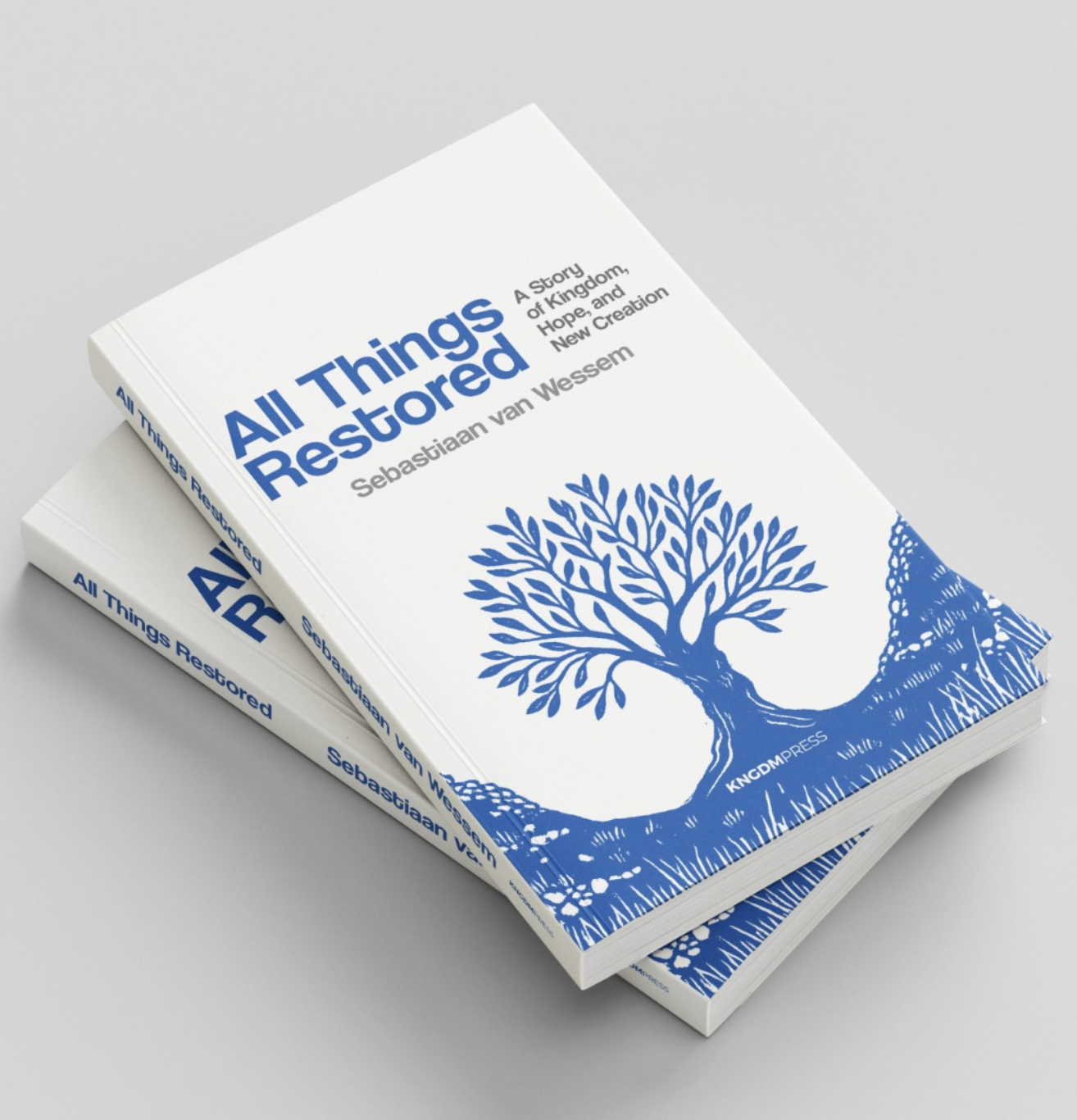
Read Sebastiaan’s new book, “All Things Restored”
A people who hasten the day are a people committed to the proclamation of the Kingdom:
And this gospel of the kingdom will be proclaimed throughout the whole world as a testimony to all nations, and then the end will come.[6]
The message is not only that sins are forgiven, but that the King is present and his reign is breaking in. Every act of witness becomes part of that unfolding story.
A people who hasten the day are a people shaped by holiness. Not as legalism, but as witness. Holy lives reflect the character of God in a world still marked by brokenness. Lives that belong, even now, to the age to come.
And it is a people who carry God’s heart for Israel and the nations. Paul speaks of a mystery still unfolding, a partial hardening, a fullness yet to come, a moment when “all Israel will be saved.”[7] The story is not finished. And the Church is invited to stand in that tension, praying, longing and participating.
These marks are not separate themes. They are facets of a single calling. We are a people aligned with the future.
LIVING BETWEEN PROMISE AND FULFILLMENT
We live in a space that Scripture returns to again and again: between promise given and promise fulfilled, between resurrection and restoration, between the outpouring of the Spirit and the renewal of all things.
It can feel like an in-between place, but it is not a meaningless one. It is the place of formation: the place where the Church learns to live as a preview of what is coming, where faith takes shape not only in our hearts but in our actions.
Like those in Jesus’ parable who kept oil in their lamps, we are called to live ready for the coming of the bridegroom, not through urgency alone, but through ongoing relationship, sustained presence, and a life filled with the Spirit.
THE PROMISE THAT HOLDS IT ALL TOGETHER
Peter brings it all back to a single, anchoring hope:
According to his promise we are waiting for new heavens and a new earth in which righteousness dwells.[8]
This is where the story is going. Not toward escape, but toward restoration, toward a world made whole, toward the healing of what was broken, toward the unveiled dwelling of God with his people.
The delay, then, is not wasted time. It is God’s patience, giving room for repentance and return. The present is not disconnected from the future. It is the time in which God is preparing a people who will share in that future.
A QUIET INVITATION
So perhaps the question is not when the day will come, but: What kind of people are we becoming as we wait? Are our lives aligned with the future we hope for? Do they reflect the unity, holiness, and mission of the coming Kingdom? Are we living as those who belong to what is ahead?
The promise stands. And in the meantime, the future is quietly, persistently pulling us forward.
FOOTNOTES
[1] 2 Peter 3:8-9 ESV
[2] 2 Peter 3:10 ESV
[3] 2 Peter 3:12 ESV
[4] 2 Peter 3:11 ESV
[5] John 17:21
[6] Matthew 24:14 ESV
[7] Romans 11:25-26
[8] 2 Peter 3:13
Sebastiaan van Wessem is the Global Director of KNGDM Alliance and lead pastor of Celebration Church Netherlands. He is the author of All Things Restored, a book exploring the Bible as one unified story of God’s restoration of Israel, the Church, and creation. Find his blog on allthingsrestored.cc.