
A FORGOTTEN TENT, A COMING KINGDOM
Almost no one takes Leviticus seriously.
It's not a loud book. It does not carry the sweeping arc of Genesis or the prophetic drama of Exodus. It sits quietly near the beginning of our Bibles—difficult, unfamiliar, full of smoke and blood and repetitive instructions for a world that appears no longer to exist.
It's easy to flip past it on our way to something else. That's how most of us encounter Leviticus. Not by reading it, but by not reading it. Somewhere along the way we absorb an assumption so familiar we barely notice it: Jesus came to free us from all this.
No one rejects Leviticus outright, but it’s hard for modern readers to engage. It just sits there, forgotten.
Unfortunately, Christian forgetfulness is not neutral. When we set Leviticus aside thinking we were simply moving on from an outdated past, we began to lose sight of our future. A vision, a vocabulary, and a way of understanding what God is doing in the world and where He is taking it.
Leviticus is not a description of a world that passed away. It's a vision of a world that is still yet to come.
Leviticus is eschatology.
A WORLD YOU COULD POINT TO
At its heart, Leviticus is a story of a people whose lives center around the holy human commission of hosting the presence of God on here the land. They keep a dwelling where heaven and earth mingle, ordered so carefully and intentionally that the giver of life who fills creation with abundance and goodness can remain in the midst of mere mortals without consuming them.
This was once a reality you could point to on a map: Jerusalem, the temple mount, with an altar and courts filled with people, animals, and the sound of worship.
Before synagogues and cathedrals, before most of our traditions codified into creeds, there was a people learning to live near the presence of God in a real place, on real ground, according to his instructions. Leviticus is what that life looked like. Neither Jesus, the apostles, nor the prophets ever imagined a future without it.
They speak not of its passing away, but of its glorious restoration.
All the nations shall flow to it… and many peoples shall come, and say: ‘Come, let us go up to the mountain of the Lord’.[1]
They did not move away from the world Leviticus describes ordissolve its categories. The biblical authors extend them to the ends of the earth. What began as a tent in a localized reality among Israel becomes the architecture of the renewed world.
Which means Leviticus is not pointing backward to something that expired at the cross. It's pointing forward.
WHAT WE LOST
When the temple was destroyed in the first century and the Jewish people tragically exiled from their holy place, the story of Leviticus collapsed with it. Gentile believers, already drifting from the Jewish cradle of their faith, lost Leviticus within a few generations. Its story was gradually reinterpreted through the lens of later Christian tradition, a tradition that eventually had little use for the Levitically-rich world of Jesus and the prophets.
Perhaps we told ourselves we had graduated from it. That the cross rendered the earthly house of the Lord irrelevant, the Levitical vision of worship replaced by something cleaner, less Jewish, or more spiritual. Whatever the reason, Leviticus slipped view and from our gospel—and something else went with it. Layer by layer, we lost the world it was teaching us how to see.
Leviticus describes a chosen people, place, and pattern, and all three are essential to the good news God has promised. Around the tent stands Israel: the people chosen to keep his dwelling, guard his presence, and entrusted with the responsibility of teaching the world how to draw near to him. Scripture insists the nations were never meant to replace that people or revise that role, but to be drawn into its hope—streaming toward the life that flows from Zion and learning to worship the God of Israel on his terms.
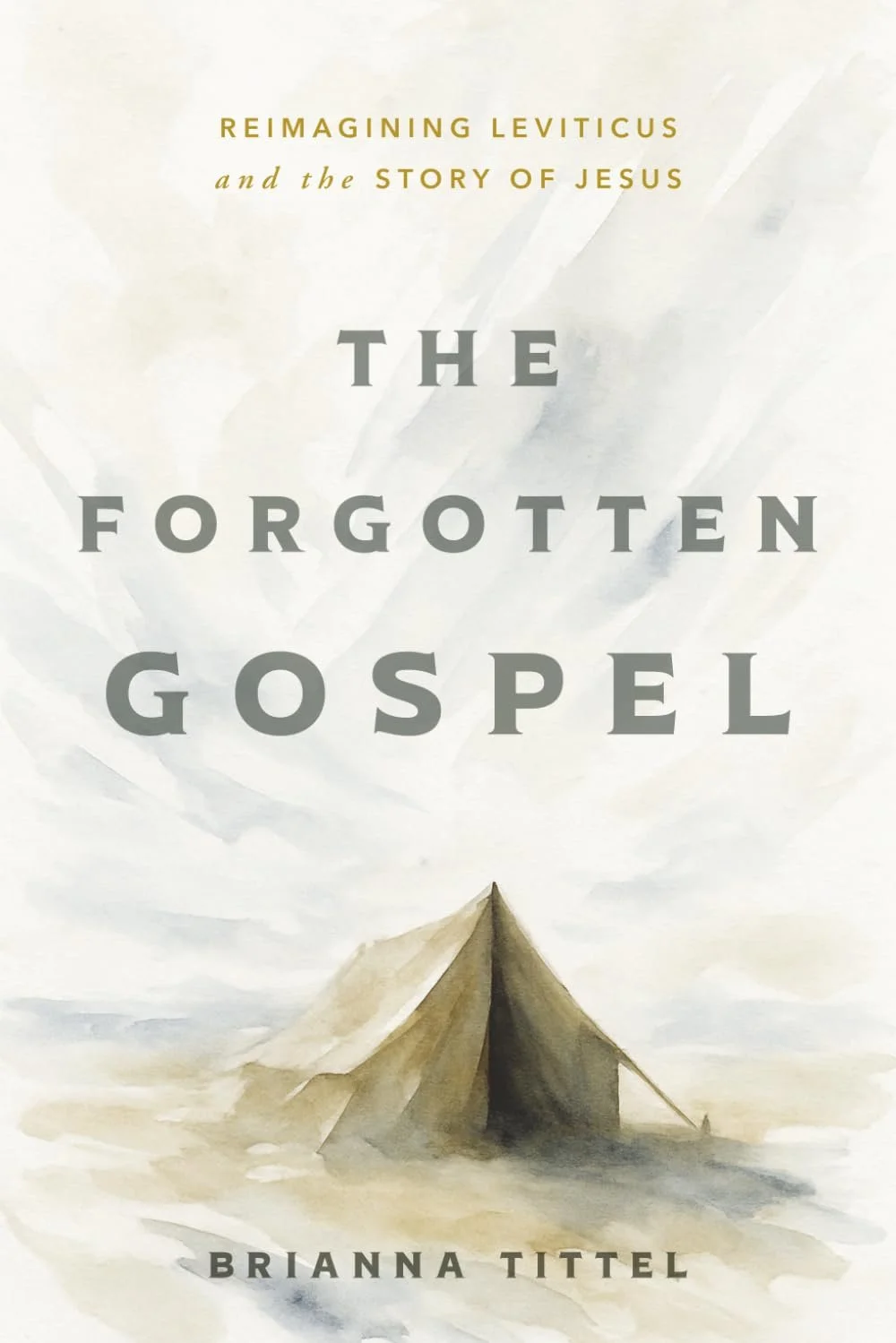
Read Brianna’s new book ‘The Forgotten Gospel’
But if Leviticus is reduced to a list of now-irrelevant rituals that Jesus checked off at the cross on our behalf, it becomes remarkably easy to abandon Israel there as well. In too many imaginations, they are recast as a land and people of the past, bound to some flawed system that has come and gone. Once that move is made—if Leviticus belongs only to the past—then the future hope and kingdom it describes dies right along with it.
The biblical authors, however, do not flinch from Israel’s commission of hosting the divine presence on the land. They insist it remains God’s irrevocable promise.
Leviticus reveals the eschatological blueprint of this hope, which is why Jesus and the apostles never depart from it. They trust in the day Leviticus comes true and the glory of God is once again in the midst of his people.
THE MISSION OF JESUS
This is the mission Jesus stepped into, and its one He is still actively leading forward. An eschatology divested from Leviticus produces a faith dangerously close to detachment from his greatest hope. And the gospel, severed from a story that revolves around the hosting of a holy tent, becomes increasingly removed from the teachings, people, and practices that shape destiny of our risen Lord.
When Leviticus disappears from our imaginations, we lose the story of Jesus—and with it, the story of our God. We may find ourselves drifting into a vision of the kingdom that looks nothing like the one heralded in song by a virgin in Nazareth, or the one expected by every disciple who walked with the child she bore.
But Scripture does not drift. Revelation unveils Leviticus in fullness: a city of priestly worship under a messianic king. Jesus came preaching the gospel of a kingdom aimed at leading creation towards the Torah’s greatest hope: the tabernacle of God among man.
But if Leviticus no longer has a place in our gospel— if it plays no role in how we understand Jesus, the New Testament, or the nature of God, if it is absent from our spiritual formation, our biblical imagination, or from our invitation to follow the one Scripture calls our Great High Priest—then what gospel are we preaching? And what kingdom are we expecting?
HEARING THE VOICE FROM THE TENT AGAIN
We are receiving a kingdom that cannot be shaken”.[2]
As the nations of our world tremble and totter, we trust that the work of Israel’s Messiah is both accomplished and yet unfolding. The way has been opened, and we set our hope on the world it will soon open into.
Leviticus calls us into a faith with the dwelling of God at its center and a story once again rooted in his unfailing promises to Abraham. When we read Leviticus within the eschatological horizon of Jesus, it no longer closes a chapter behind us but opens the way to imagine a future kingdom before us.
A kingdom with an altar at its center, a people gathered in worship, and a table set—with room for all who love the King.
DISCUSSION QUESTIONS
How have you understood the book of Leviticus previously?
Reread Leviticus with this new lens- how might you understand it differently now?
[1] Isaiah 2:2–3
[2] Hebrews 12:28
Brianna Tittel is a writer and lifelong student of Scripture who longs to see others drawn into its story. She has taught the Bible in homes, churches, and parachurch settings, always with the conviction that ordinary people can open the Scriptures and understand them—even the hard parts. Her writing seeks to sharpen, equip, and spark curiosity about Scripture, while bearing witness to Jesus the Messiah, God’s enduring promises to Abraham, his irrevocable calling of Israel and the Jewish people, and the hope of Messiah’s return. Brianna lives in northeast Wisconsin with her husband and their four children.